

Assyrian NetworkAssyrian Network

© 2026 Assyrian Network.
All rights reserved.
Privacy Policy | Terms of Service

Assyrian NetworkOur MissionPillars of UnityPrinciplesContact Us
AssyriansWho Are AssyriansVibrant IdentityAssyrian DiasporaAncient Origins
CommunityDiscoverPeopleOrganizationsModerator Panel

The Assyrian Diaspora

A Global Community United by Heritage

Centuries of persecution, particularly the Assyrian Genocide (Sayfo) during World War I, followed by ongoing instability and violence in their Middle Eastern homeland, have forced Assyrians to scatter across the globe. Today, the majority of Assyrians live in diaspora, creating vibrant communities that preserve their ancient culture while contributing to their adopted homelands.

Timeline of Persecution

Through the centuries, Assyrians have endured systematic persecution and genocide. This timeline documents the major events that have shaped the modern Assyrian diaspora.

1914-1924
1914-1924
Genocide

Sayfo - The Assyrian Genocide

During World War I and its aftermath, the Ottoman Empire executed a systematic policy of extermination against its Christian subjects, known to Assyrians as the Sayfo (The Sword). Orchestrated by the Committee of Union and Progress and executed by Ottoman troops and allied Kurdish irregulars, the campaign involved mass executions, death marches, and starvation. The violence spanned the Hakkari highlands, the Tur Abdin plateau, and the Urmia region of Persia. An estimated 250,000 to 500,000 Assyrians—over half the pre-war population—perished.

Impact: The Sayfo completely erased the Assyrian presence in their ancestral highlands of southeastern Turkey, ending millennia of continuous habitation. It created a traumatized, displaced population in British-controlled Iraq, setting the stage for future conflicts. The loss of the intellectual and religious leadership crippled the community's social structure, and the denial of this genocide by Turkey remains a central trauma for the diaspora today.

1933
1933
Massacre

Simele Massacre

In August 1933, shortly after Iraq gained independence, the Iraqi Army led by General Bakr Sidqi orchestrated a genocidal campaign against the Assyrian population in northern Iraq. After disarming the population with promises of protection, government forces and irregular tribesmen systematically executed between 3,000 and 6,000 unarmed Assyrian civilians in the town of Simele. The violence extended to over 60 surrounding villages, involving widespread looting and destruction. This event was celebrated in Baghdad as a victory for the new nation, cementing anti-Assyrian sentiment in Iraqi politics.

Impact: The massacre ended Assyrian hopes for autonomy in Iraq and triggered a mass exodus to the Khabour region in Syria. It established a precedent of state-sanctioned violence against minorities in the Middle East and highlighted the failure of the League of Nations. Historically significant, the Simele Massacre was one of the primary case studies used by Raphael Lemkin to define the concept of "genocide."

1969
1969
Massacre

Soriya Massacre

On September 16, 1969, Iraqi military forces committed a massacre in the Assyrian village of Soriya (Zakho district). Under the pretext of a nearby landmine explosion, soldiers gathered the village inhabitants and opened fire indiscriminately. Forty-seven civilians were killed, including the village priest, Father Hanna Qasha, who was executed while attempting to shield his community. The massacre occurred during the early years of the Ba'athist regime's militarization of the north.

Impact: Soriya became a symbol of the vulnerability of Assyrian rural life under the Ba'athist regime. It signaled the beginning of a "scorched earth" policy in the northern border regions, which would eventually lead to the destruction of hundreds of Assyrian villages in the subsequent decades. The lack of justice for the victims reinforced the community's status as second-class citizens.

1968-2003
1968-2003
Conflict

The Ba'athist Era

Under the Ba'athist regime, Assyrians faced a multi-faceted campaign of erasure. The state enforced "Arabization" policies, coercing Assyrians to register their ethnicity as "Arab" (1977 Census) and banning the Syriac language. The persecution peaked during the Anfal Campaign (1988), a genocidal operation that, while targeting Kurds, resulted in the destruction of over 100 Assyrian villages and ancient churches. Chemical weapons and mass executions were utilized to clear the northern border regions. Additionally, the Assyrian community suffered disproportionately high casualties due to forced conscription during the Iran-Iraq War (1980-1988).

Impact: These policies destroyed the centuries-old network of rural Assyrian villages, forcing a traumatic urbanization into cities like Baghdad and Mosul. The cultural destruction created a "lost generation" disconnected from their heritage due to language bans. The psychological trauma of Anfal and the war triggered the first massive wave of emigration to the West, initiating a demographic hemorrhage that has never reversed.

1991-2003
1991-2003
Conflict

The Gulf Wars and the Sanctions Era

Following the 1991 Gulf War, the Assyrian community was fractured between the Kurdish-controlled north and the sanction-crippled south. In the south, UN sanctions devastated the Assyrian middle class, prompting widespread emigration. In the north, while protected from the Ba'athist regime by the No-Fly Zone, Assyrians faced political marginalization, land seizures, and targeted assassinations under Kurdish administration. The 2003 US-led invasion, while removing Saddam Hussein, dismantled the state's security apparatus, creating a vacuum that allowed Islamist militias to rise and target Christians as "proxies" of the West.

Impact: This period marked the economic destitution of the Assyrian community and the beginning of their transformation from a rooted national minority into a diasporic refugee population. The post-2003 chaos unleashed a wave of church bombings, kidnappings, and sectarian violence that forced hundreds of thousands to flee Baghdad and Basra.

2010
2010
Massacre

The Our Lady of Salvation Massacre

On October 31, 2010, militants from the Islamic State of Iraq (ISI) stormed the Our Lady of Salvation Syriac Catholic Cathedral in Baghdad during Sunday mass. In the ensuing siege and botched rescue attempt, 58 worshippers and priests were killed and 78 wounded. The attackers explicitly targeted the church to drive Christians out of the country. It remains one of the single bloodiest attacks against the Christian community in Iraq since the 2003 invasion.

Impact: This massacre was a psychological tipping point for Baghdad's Assyrians. It shattered the belief that Christians could remain safely in the capital. In the months following the attack, a massive wave of families fled Baghdad for the Nineveh Plain or the Kurdistan Region, effectively ending the era of a vibrant Assyrian presence in Iraq's capital.

2014-2017
2014-2017
Genocide

ISIS Persecution

In 2014, the Islamic State (ISIS) launched a genocidal campaign against Assyrians in Mosul and the Nineveh Plain. Marking Christian homes with "N" (Nasrani), militants forced the expulsion of over 150,000 Assyrians after security forces abandoned the region. The campaign involved forced conversions, sexual slavery, and the destruction of ancient heritage sites like Nimrud. In 2015, ISIS expanded this to the Khabour Valley in Syria, kidnapping hundreds and destroying villages built by survivors of the 1933 massacre. Recognized as genocide by the UN, US, and EU.

Impact: The ISIS genocide represents an existential threat to the Assyrian presence in the Middle East. It uprooted the last significant concentration of Assyrians in their ancestral homeland. The betrayal by security forces created a deep "trust deficit," preventing many from returning even after liberation. The destruction of cultural heritage aimed to erase Assyrian history, while mass displacement accelerated migration, leaving the homeland's population at a critical low (<300,000).

Today, the Assyrian people face a dual struggle: the fight for international recognition of the Sayfo and subsequent genocides to end the cycle of denial, and the urgent battle for survival in their homeland. Despite recognition by countries including Sweden, Germany, and the Netherlands, Turkey and Iraq continue to deny these historical realities. Meanwhile, the indigenous Assyrian population in Iraq has plummeted to less than 300,000. Assyrians continue to call for a protected self-governing province in the Nineveh Plain, the removal of militias from their towns, and the return of stolen lands to ensure their future existence.
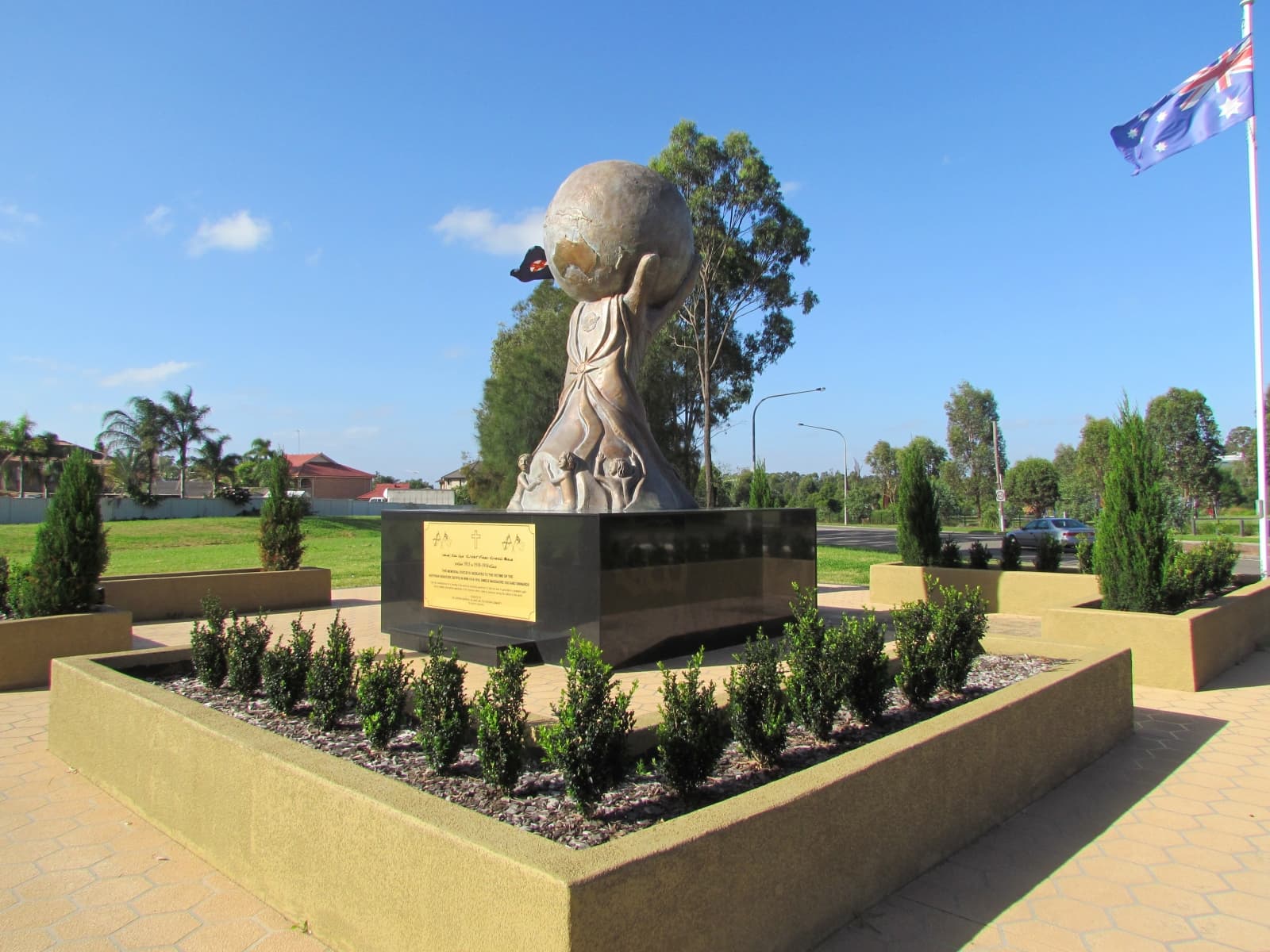
Sayfo Memorial, Fairfield, Sydney

Sayfo Memorial

Fairfield, Sydney, Australia

Diaspora at a Glance

Loading map...

Major Diaspora Communities

North America

United States

Chicago, Illinois

Largest Assyrian community in the US

Detroit / Sterling Heights, Michigan

Vibrant community with numerous churches and organizations

California

Modesto, Turlock, San Diego, and surrounding areas

Phoenix, Arizona

Growing community with cultural centers

Canada

Toronto, Ontario

Major cultural hub with churches and community centers

Hamilton, Ontario

Strong community presence

Montreal, Quebec

Growing Assyrian population

Akitu Celebration in Turlock, California, USA

Europe

Sweden

Stockholm and Södertälje host the largest Assyrian community outside the Middle East (70,000+)

Germany

Significant communities across various cities

Netherlands

Well-established community with cultural institutions

United Kingdom

Growing presence in London and other major cities

Australia & New Zealand

Sydney

Major community with churches and cultural organizations

Melbourne

Vibrant Assyrian presence and community life
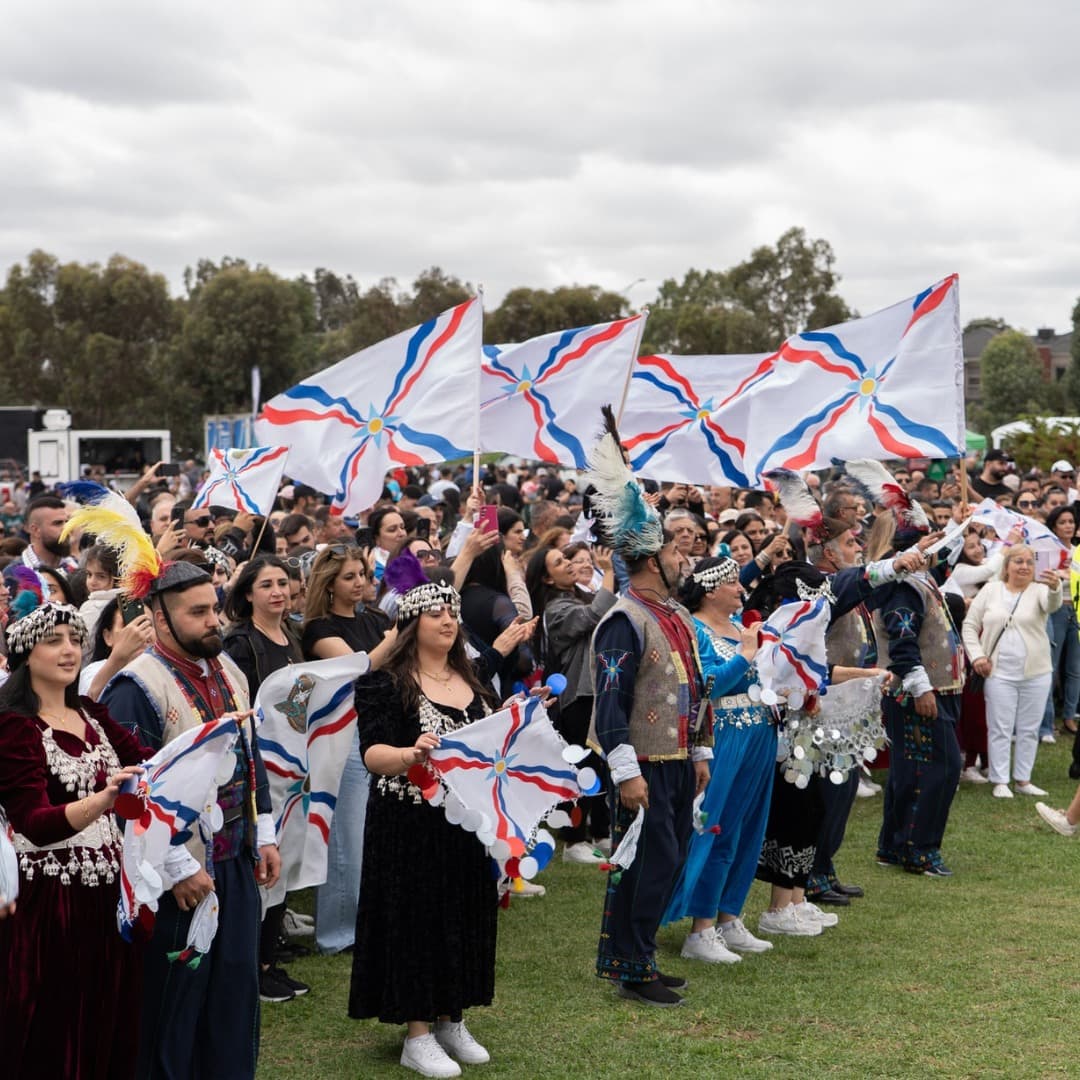
Akitu Celebration in Melbourne, Australia

Middle East (Homeland)

Iraq

Nineveh Plains, Erbil, Baghdad, Duhok - ancestral heartland, though drastically reduced population

Syria

Civil war has decimated communities; most have fled to safety abroad

Iran

Urmia region maintains small but resilient Assyrian presence

Cultural Preservation in Diaspora

Churches

Churches serve as community centers, providing not just spiritual guidance but also social connection, language classes, and cultural events.

Language Schools

Dedicated programs teach children Assyrian Neo-Aramaic, ensuring the language survives in diaspora communities.

Community Organizations

Groups like the Assyrian Universal Alliance (AUA) and Assyrian Aid Society advocate for rights and provide support.

Cultural Festivals

Celebrations like Kha b-Nisan bring communities together to preserve heritage through traditional music, dance, and foods.

Media

TV channels, radio stations, and publications in Assyrian keep the community informed and connected. Social media expanded the reach.

Political Advocacy

Organizations work for genocide recognition and homeland rights at international levels. Efforts for local rights within governments persist.

Challenges & Future

Current Challenges

Language Preservation

Younger generations increasingly speak only their host country's language, risking loss of Assyrian Neo-Aramaic.

Assimilation vs. Cultural Retention

Balancing integration into host societies while maintaining distinct cultural identity.

Youth Engagement

Keeping young Assyrians connected to their heritage in a modern, globalized world.

Hope for the Future

Digital Connectivity

Platforms like Assyrian Network enable global connection, making it easier than ever to maintain community bonds across continents and engage youth through technology.

Homeland Return Aspirations

Many Assyrians dream of returning to and rebuilding their ancestral lands, particularly the Nineveh Plains, once safety and stability are restored.

Cultural Renaissance

A new generation of Assyrian artists, musicians, and activists are reimagining traditional culture for the modern age, ensuring its relevance and vitality.

Diaspora at a Glance

3-4M

Global Population

50+

Countries with Communities

1000+

Churches Worldwide

65%+

Living in Diaspora

Though scattered across the globe, the Assyrian diaspora remains united by shared heritage, faith, and an unwavering commitment to preserving their 6,700-year-old legacy. From Chicago to Sydney, from Stockholm to Phoenix, Assyrians are building bridges – connecting communities, preserving heritage, and building tomorrow.

Assyrian NetworkAssyrian Network
    • Our Mission
    • Pillars of Unity
    • Principles
    • Contact Us
    • Who Are Assyrians
    • Vibrant Identity
    • Assyrian Diaspora
    • Ancient Origins
    • Overview
    • People
    • Organizations
  • Imposter Game

The Assyrian Diaspora

A Global Community United by Heritage

Centuries of persecution, particularly the Assyrian Genocide (Sayfo) during World War I, followed by ongoing instability and violence in their Middle Eastern homeland, have forced Assyrians to scatter across the globe. Today, the majority of Assyrians live in diaspora, creating vibrant communities that preserve their ancient culture while contributing to their adopted homelands.

Timeline of Persecution

Through the centuries, Assyrians have endured systematic persecution and genocide. This timeline documents the major events that have shaped the modern Assyrian diaspora.

1914-1924
1914-1924
Genocide

Sayfo - The Assyrian Genocide

During World War I and its aftermath, the Ottoman Empire executed a systematic policy of extermination against its Christian subjects, known to Assyrians as the Sayfo (The Sword). Orchestrated by the Committee of Union and Progress and executed by Ottoman troops and allied Kurdish irregulars, the campaign involved mass executions, death marches, and starvation. The violence spanned the Hakkari highlands, the Tur Abdin plateau, and the Urmia region of Persia. An estimated 250,000 to 500,000 Assyrians—over half the pre-war population—perished.

Impact: The Sayfo completely erased the Assyrian presence in their ancestral highlands of southeastern Turkey, ending millennia of continuous habitation. It created a traumatized, displaced population in British-controlled Iraq, setting the stage for future conflicts. The loss of the intellectual and religious leadership crippled the community's social structure, and the denial of this genocide by Turkey remains a central trauma for the diaspora today.

1933
1933
Massacre

Simele Massacre

In August 1933, shortly after Iraq gained independence, the Iraqi Army led by General Bakr Sidqi orchestrated a genocidal campaign against the Assyrian population in northern Iraq. After disarming the population with promises of protection, government forces and irregular tribesmen systematically executed between 3,000 and 6,000 unarmed Assyrian civilians in the town of Simele. The violence extended to over 60 surrounding villages, involving widespread looting and destruction. This event was celebrated in Baghdad as a victory for the new nation, cementing anti-Assyrian sentiment in Iraqi politics.

Impact: The massacre ended Assyrian hopes for autonomy in Iraq and triggered a mass exodus to the Khabour region in Syria. It established a precedent of state-sanctioned violence against minorities in the Middle East and highlighted the failure of the League of Nations. Historically significant, the Simele Massacre was one of the primary case studies used by Raphael Lemkin to define the concept of "genocide."

1969
1969
Massacre

Soriya Massacre

On September 16, 1969, Iraqi military forces committed a massacre in the Assyrian village of Soriya (Zakho district). Under the pretext of a nearby landmine explosion, soldiers gathered the village inhabitants and opened fire indiscriminately. Forty-seven civilians were killed, including the village priest, Father Hanna Qasha, who was executed while attempting to shield his community. The massacre occurred during the early years of the Ba'athist regime's militarization of the north.

Impact: Soriya became a symbol of the vulnerability of Assyrian rural life under the Ba'athist regime. It signaled the beginning of a "scorched earth" policy in the northern border regions, which would eventually lead to the destruction of hundreds of Assyrian villages in the subsequent decades. The lack of justice for the victims reinforced the community's status as second-class citizens.

1968-2003
1968-2003
Conflict

The Ba'athist Era

Under the Ba'athist regime, Assyrians faced a multi-faceted campaign of erasure. The state enforced "Arabization" policies, coercing Assyrians to register their ethnicity as "Arab" (1977 Census) and banning the Syriac language. The persecution peaked during the Anfal Campaign (1988), a genocidal operation that, while targeting Kurds, resulted in the destruction of over 100 Assyrian villages and ancient churches. Chemical weapons and mass executions were utilized to clear the northern border regions. Additionally, the Assyrian community suffered disproportionately high casualties due to forced conscription during the Iran-Iraq War (1980-1988).

Impact: These policies destroyed the centuries-old network of rural Assyrian villages, forcing a traumatic urbanization into cities like Baghdad and Mosul. The cultural destruction created a "lost generation" disconnected from their heritage due to language bans. The psychological trauma of Anfal and the war triggered the first massive wave of emigration to the West, initiating a demographic hemorrhage that has never reversed.

1991-2003
1991-2003
Conflict

The Gulf Wars and the Sanctions Era

Following the 1991 Gulf War, the Assyrian community was fractured between the Kurdish-controlled north and the sanction-crippled south. In the south, UN sanctions devastated the Assyrian middle class, prompting widespread emigration. In the north, while protected from the Ba'athist regime by the No-Fly Zone, Assyrians faced political marginalization, land seizures, and targeted assassinations under Kurdish administration. The 2003 US-led invasion, while removing Saddam Hussein, dismantled the state's security apparatus, creating a vacuum that allowed Islamist militias to rise and target Christians as "proxies" of the West.

Impact: This period marked the economic destitution of the Assyrian community and the beginning of their transformation from a rooted national minority into a diasporic refugee population. The post-2003 chaos unleashed a wave of church bombings, kidnappings, and sectarian violence that forced hundreds of thousands to flee Baghdad and Basra.

2010
2010
Massacre

The Our Lady of Salvation Massacre

On October 31, 2010, militants from the Islamic State of Iraq (ISI) stormed the Our Lady of Salvation Syriac Catholic Cathedral in Baghdad during Sunday mass. In the ensuing siege and botched rescue attempt, 58 worshippers and priests were killed and 78 wounded. The attackers explicitly targeted the church to drive Christians out of the country. It remains one of the single bloodiest attacks against the Christian community in Iraq since the 2003 invasion.

Impact: This massacre was a psychological tipping point for Baghdad's Assyrians. It shattered the belief that Christians could remain safely in the capital. In the months following the attack, a massive wave of families fled Baghdad for the Nineveh Plain or the Kurdistan Region, effectively ending the era of a vibrant Assyrian presence in Iraq's capital.

2014-2017
2014-2017
Genocide

ISIS Persecution

In 2014, the Islamic State (ISIS) launched a genocidal campaign against Assyrians in Mosul and the Nineveh Plain. Marking Christian homes with "N" (Nasrani), militants forced the expulsion of over 150,000 Assyrians after security forces abandoned the region. The campaign involved forced conversions, sexual slavery, and the destruction of ancient heritage sites like Nimrud. In 2015, ISIS expanded this to the Khabour Valley in Syria, kidnapping hundreds and destroying villages built by survivors of the 1933 massacre. Recognized as genocide by the UN, US, and EU.

Impact: The ISIS genocide represents an existential threat to the Assyrian presence in the Middle East. It uprooted the last significant concentration of Assyrians in their ancestral homeland. The betrayal by security forces created a deep "trust deficit," preventing many from returning even after liberation. The destruction of cultural heritage aimed to erase Assyrian history, while mass displacement accelerated migration, leaving the homeland's population at a critical low (<300,000).

Today, the Assyrian people face a dual struggle: the fight for international recognition of the Sayfo and subsequent genocides to end the cycle of denial, and the urgent battle for survival in their homeland. Despite recognition by countries including Sweden, Germany, and the Netherlands, Turkey and Iraq continue to deny these historical realities. Meanwhile, the indigenous Assyrian population in Iraq has plummeted to less than 300,000. Assyrians continue to call for a protected self-governing province in the Nineveh Plain, the removal of militias from their towns, and the return of stolen lands to ensure their future existence.

Sayfo Memorial, Fairfield, Sydney

Sayfo Memorial

Fairfield, Sydney, Australia

Diaspora at a Glance

Loading map...

Major Diaspora Communities

North America

United States

Chicago, Illinois

Largest Assyrian community in the US

Detroit / Sterling Heights, Michigan

Vibrant community with numerous churches and organizations

California

Modesto, Turlock, San Diego, and surrounding areas

Phoenix, Arizona

Growing community with cultural centers

Canada

Toronto, Ontario

Major cultural hub with churches and community centers

Hamilton, Ontario

Strong community presence

Montreal, Quebec

Growing Assyrian population

Akitu Celebration in Turlock, California, USA

Europe

Sweden

Stockholm and Södertälje host the largest Assyrian community outside the Middle East (70,000+)

Germany

Significant communities across various cities

Netherlands

Well-established community with cultural institutions

United Kingdom

Growing presence in London and other major cities

Australia & New Zealand

Sydney

Major community with churches and cultural organizations

Melbourne

Vibrant Assyrian presence and community life

Akitu Celebration in Melbourne, Australia

Middle East (Homeland)

Iraq

Nineveh Plains, Erbil, Baghdad, Duhok - ancestral heartland, though drastically reduced population

Syria

Civil war has decimated communities; most have fled to safety abroad

Iran

Urmia region maintains small but resilient Assyrian presence

Cultural Preservation in Diaspora

Churches

Churches serve as community centers, providing not just spiritual guidance but also social connection, language classes, and cultural events.

Language Schools

Dedicated programs teach children Assyrian Neo-Aramaic, ensuring the language survives in diaspora communities.

Community Organizations

Groups like the Assyrian Universal Alliance (AUA) and Assyrian Aid Society advocate for rights and provide support.

Cultural Festivals

Celebrations like Kha b-Nisan bring communities together to preserve heritage through traditional music, dance, and foods.

Media

TV channels, radio stations, and publications in Assyrian keep the community informed and connected. Social media expanded the reach.

Political Advocacy

Organizations work for genocide recognition and homeland rights at international levels. Efforts for local rights within governments persist.

Challenges & Future

Current Challenges

Language Preservation

Younger generations increasingly speak only their host country's language, risking loss of Assyrian Neo-Aramaic.

Assimilation vs. Cultural Retention

Balancing integration into host societies while maintaining distinct cultural identity.

Youth Engagement

Keeping young Assyrians connected to their heritage in a modern, globalized world.

Hope for the Future

Digital Connectivity

Platforms like Assyrian Network enable global connection, making it easier than ever to maintain community bonds across continents and engage youth through technology.

Homeland Return Aspirations

Many Assyrians dream of returning to and rebuilding their ancestral lands, particularly the Nineveh Plains, once safety and stability are restored.

Cultural Renaissance

A new generation of Assyrian artists, musicians, and activists are reimagining traditional culture for the modern age, ensuring its relevance and vitality.

Diaspora at a Glance

3-4M

Global Population

50+

Countries with Communities

1000+

Churches Worldwide

65%+

Living in Diaspora

Though scattered across the globe, the Assyrian diaspora remains united by shared heritage, faith, and an unwavering commitment to preserving their 6,700-year-old legacy. From Chicago to Sydney, from Stockholm to Phoenix, Assyrians are building bridges – connecting communities, preserving heritage, and building tomorrow.