
Assyrian NetworkAssyrian Network

© 2026 Assyrian Network.
All rights reserved.
Privacy Policy | Terms of Service

Assyrian NetworkOur MissionPillars of UnityPrinciplesContact Us
AssyriansWho Are AssyriansVibrant IdentityAssyrian DiasporaAncient Origins
CommunityDiscoverPeopleOrganizationsModerator Panel

Ancient Origins

From the Cradle of Civilization to Global Empire

The Cradle of Civilization
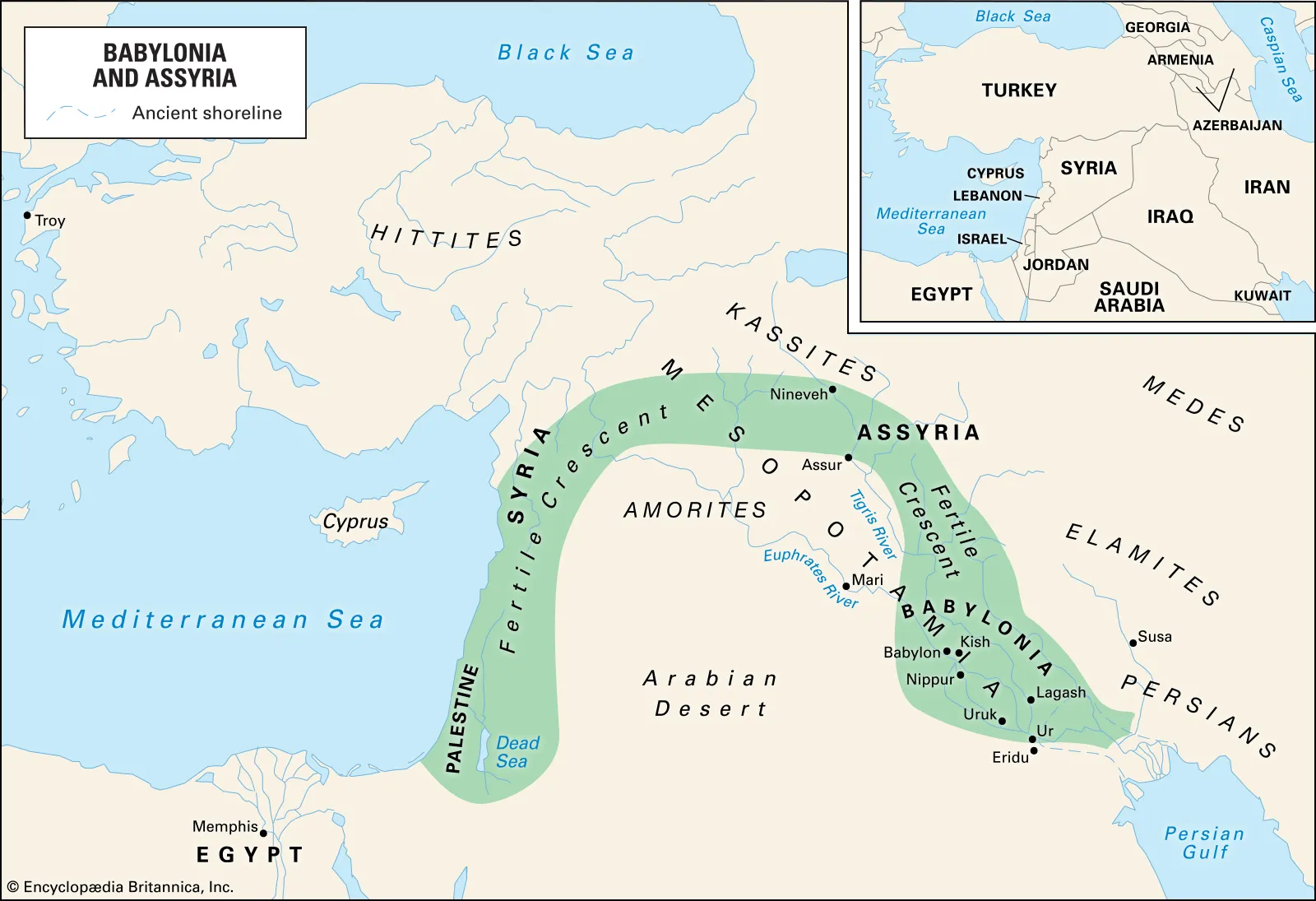
Ancient Mesopotamia

The roots of the Assyrian people trace back to ancient Mesopotamia, the land between the Tigris and Euphrates rivers, often called the "Cradle of Civilization." It was here that some of humanity's greatest innovations first emerged: writing, the wheel, organized government, and urban civilization itself.

The City of Aššur

Around 2600 BC, the city of Aššur was founded on the western bank of the Tigris River. This city-state would give its name to the Assyrian people and serve as the spiritual heart of their civilization for millennia. From this humble beginning grew one of history's most powerful empires.

Timeline of Empires

Over 4,600 years of documented history

2600-2025 BC
2600-2025 BC
Genesis

The Sacred City & The Ancestors

Long before the empire, Ashur was a holy city on the Tigris, dedicated to the god Ashur. Excavations reveal temples dating back to 2900 BC, built on sand foundations typical of southern Sumer. During this era, Ashur was a vassal to the mighty empires of Akkad and Ur. The Assyrian King List records the "Kings who lived in tents," symbolizing the nomadic Amorite ancestors who eventually settled the city.

2025-1808 BC
2025-1808 BC
Commerce

The Merchant Princes of Kanesh

Following independence from Ur, Assyria became a commercial superpower. It was ruled not by a tyrant, but by a "Viceroy" (Išši'ak) and a City Assembly (Ālum). Merchants established the Karum network in Anatolia, trading tin and textiles for silver. Archives from Kanesh (23,000 tablets) reveal a sophisticated economy of joint-stock companies, contracts, and donkey caravans.

1808-1750 BC
1808-1750 BC
Conquest

The First Empire: Shamshi-Adad I

The trade peace was shattered by the Amorite warlord Shamshi-Adad I. He usurped the throne, moved the capital to Shubat-Enlil, and proclaimed himself "King of the Universe." He unified the region, placing his sons on the thrones of Mari and Ekallatum. Though his empire crumbled after his death, he established the model of absolute kingship that later Assyrian rulers would emulate.

1430-1363 BC
1430-1363 BC
Vassalage

The Crucible of Vassalage

Assyria fell under the domination of the Mitanni Empire. The Mitanni king Shaushtatar sacked Ashur, stealing the legendary Silver and Gold Doors of the temple. This humiliation fueled a desire for vengeance. Independence finally came when the diplomat-king Ashur-uballit I defeated the Mitanni, reclaimed the stolen doors, and corresponded with the Pharaoh of Egypt as an equal.

1363-1076 BC
1363-1076 BC
Resurgence

The Iron Expansion

Now a "Great Power," Assyria expanded relentlessly. Tukulti-Ninurta I conquered Babylon and commissioned the Tukulti-Ninurta Epic. Tiglath-Pileser I campaigned to the Mediterranean, hunting wild bulls and collecting clay tablets. This era saw the "Babylonization" of Assyrian culture and the codification of harsh laws, laying the groundwork for the future empire.

911-627 BC
911-627 BC
Zenith

The Zenith of Power

After surviving the Aramaean invasions, Assyria reorganized into the world's first true military machine. Tiglath-Pileser III created a standing army and institutionalized deportation. The Sargonid kings (Sennacherib, Esarhaddon, Ashurbanipal) conquered Egypt and Elam, ruling from the magnificent capitals of Nineveh and Dur-Sharrukin. The Library of Ashurbanipal preserved the sum of Mesopotamian knowledge.

612-609 BC
612-609 BC
Collapse

The Sudden Collapse

Weakened by civil wars and overextension, the empire fell to a coalition of Babylonians and Medes. The sack of Nineveh (612 BC) and the final defeat at Harran (609 BC) ended the Assyrian state. The speed of the collapse shocked the ancient world, leading to the belief that the Assyrians had been wiped out.

609 BC - Present
609 BC - Present
Endurance

The Unbroken Chain

The empire fell, but the people survived. In the kingdoms of Adiabene and Osrhoene, Assyrian identity persisted. The ancient temples became the foundations for the Church of the East as the Assyrians became the first nation to convert to Christianity. Today, the celebration of Kha b-Nisan (Year 6775+) and the Aramaic language stand as testaments to 6,000 years of unbroken history.

The Neo-Assyrian Empire

At its height, the largest empire the world had yet seen

From 911 to 609 BC, the Neo-Assyrian Empire dominated the ancient world. At its zenith under rulers like Ashurbanipal, it stretched from Egypt and Cyprus in the west to Persia in the east, from Anatolia in the north to the Arabian Gulf in the south.

The Great Capitals

Nineveh

The magnificent capital under Sennacherib, with massive walls and palaces

Aššur

The ancient spiritual and original capital

Nimrud (Kalhu)

Military capital with grand palaces and temples

Dur-Sharrukin

Sargon II's planned city, a marvel of ancient urbanism
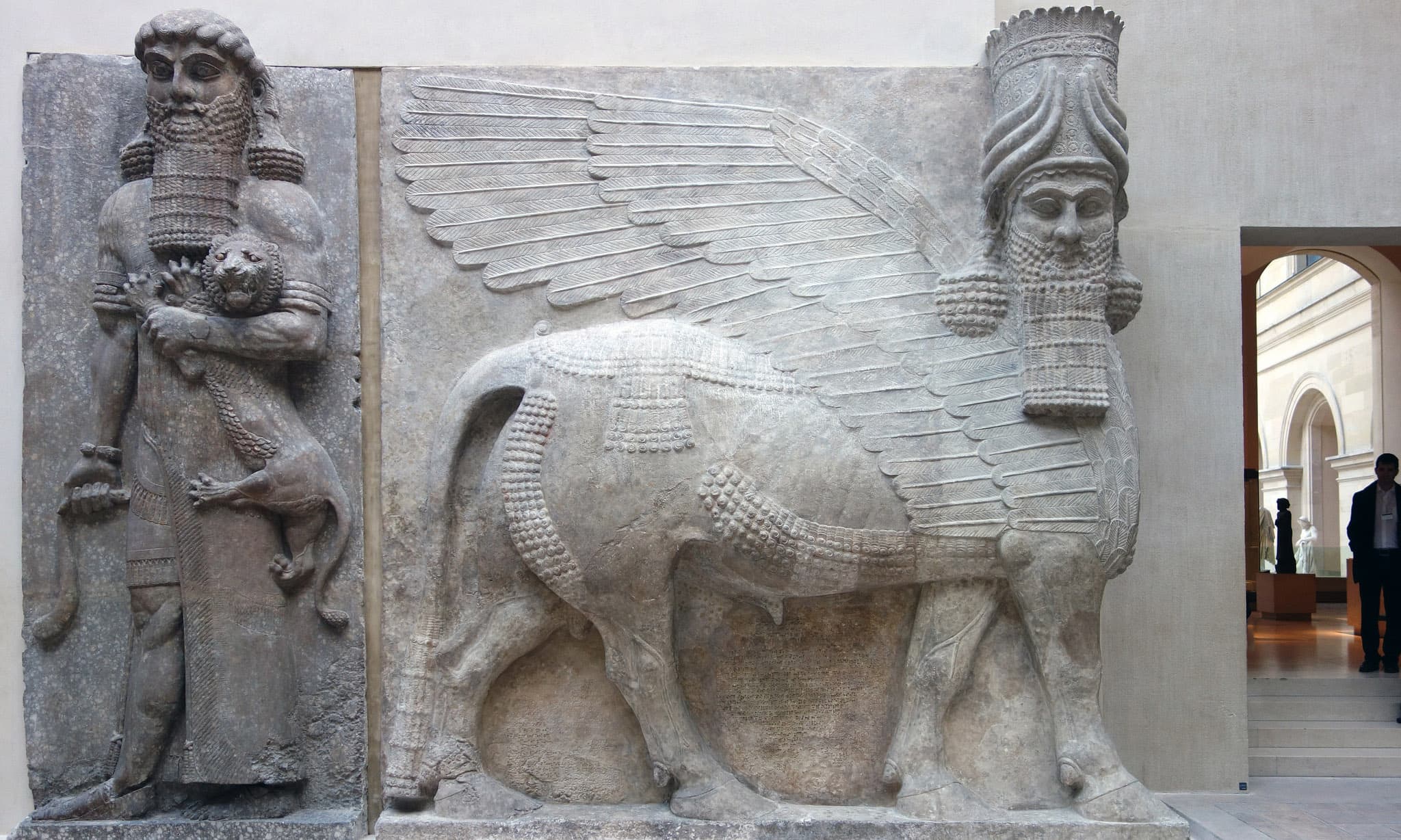
Ancient Assyria Lamassu (Winged Bull)
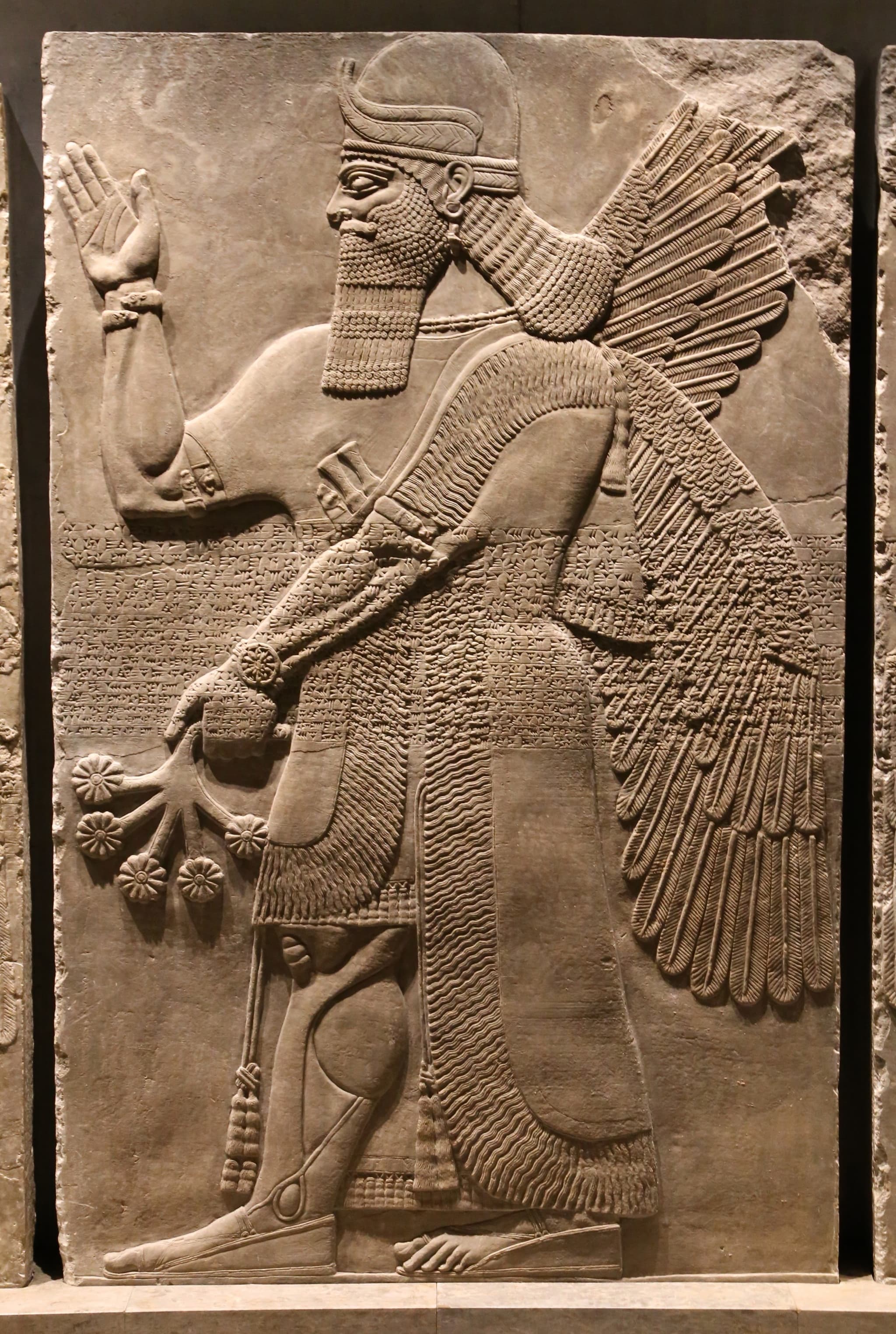
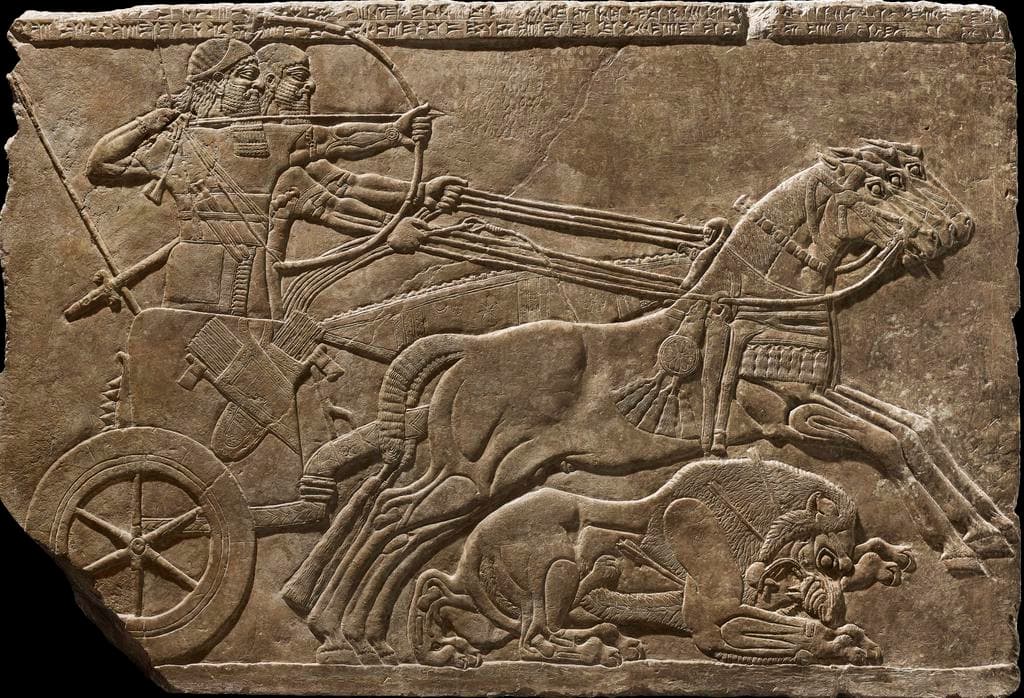
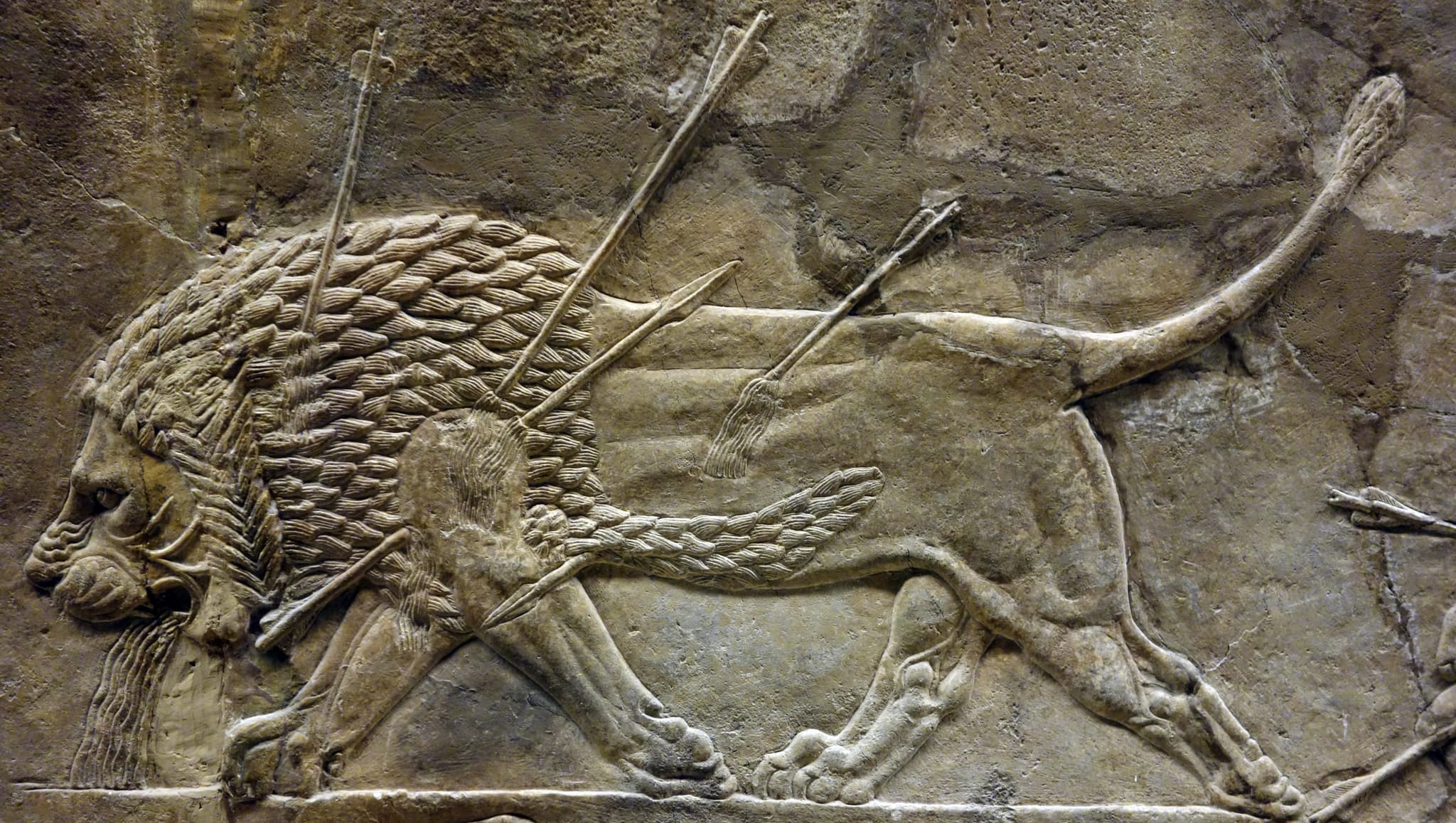
Ancient Assyria Palace Reliefs

Legendary Rulers

Ashurbanipal

668-627 BC

Created the great library, patron of arts and learning

Sargon II

722-705 BC

Built Dur-Sharrukin, expanded empire to greatest extent

Sennacherib

705-681 BC

Made Nineveh the magnificent capital, advanced engineering

Tiglath-Pileser III

745-727 BC

Reformed administration, established Neo-Assyrian dominance

Innovations & Contributions

Ancient Assyria's legacy to human civilization

Military Strategy

Revolutionary military organization, siege warfare, and iron weapons that made the Assyrian army legendary

Administration

Advanced governmental systems, provincial organization, and efficient tax collection across vast territories

Library of Ashurbanipal

World's first systematically organized library with over 30,000 clay tablets preserving knowledge

Astronomy & Mathematics

Advanced astronomical observations, calendar systems, and mathematical calculations

Medicine & Healthcare

Medical texts, surgical procedures, and pharmacological knowledge preserved on tablets

Engineering

Aqueducts, irrigation systems, massive palaces, and architectural marvels

Art & Sculpture

Magnificent palace reliefs, colossal lamassu statues, and intricate artwork depicting royal life

Writing & Literature

Cuneiform script mastery, epic poetry, historical chronicles, and administrative records

Ancient Assyria Cuneiform Trade Letter

Language & Writing

The ancient Assyrians spoke Akkadian, one of the earliest known Semitic languages. Written in the cuneiform script— wedge-shaped marks impressed into clay tablets—Akkadian served as the lingua franca of the ancient Near East for over two millennia.

Evolution to Aramaic

Over time, Aramaic gradually replaced Akkadian as the spoken language. By the late Assyrian period, Aramaic had become the common tongue, eventually evolving into Syriac and modern Assyrian Neo-Aramaic (Suret), which Assyrians speak today—a living link spanning over 3,000 years.

Legacy & Continuity

"The fall of the Assyrian Empire in 609 BC did not mark the end of the Assyrian people."

Despite the collapse of their empire, the Assyrian people endured. They survived through successive waves of Babylonian, Persian, Greek, Roman, Parthian, and Sassanian rule, each time adapting while preserving their core identity.

In the 1st century AD, they embraced Christianity, becoming one of the first nations to do so. This adoption of Christian faith became a new cornerstone of Assyrian identity, complementing their ancient heritage and providing spiritual strength through centuries of challenges.

Today, modern Assyrians carry forward a legacy stretching back 6,700 years—a testament to the resilience and endurance of one of humanity's oldest civilizations.

Assyrian NetworkAssyrian Network
    • Our Mission
    • Pillars of Unity
    • Principles
    • Contact Us
    • Who Are Assyrians
    • Vibrant Identity
    • Assyrian Diaspora
    • Ancient Origins
    • Overview
    • People
    • Organizations
  • Imposter Game

Ancient Origins

From the Cradle of Civilization to Global Empire

The Cradle of Civilization

Ancient Mesopotamia

The roots of the Assyrian people trace back to ancient Mesopotamia, the land between the Tigris and Euphrates rivers, often called the "Cradle of Civilization." It was here that some of humanity's greatest innovations first emerged: writing, the wheel, organized government, and urban civilization itself.

The City of Aššur

Around 2600 BC, the city of Aššur was founded on the western bank of the Tigris River. This city-state would give its name to the Assyrian people and serve as the spiritual heart of their civilization for millennia. From this humble beginning grew one of history's most powerful empires.

Timeline of Empires

Over 4,600 years of documented history

2600-2025 BC
2600-2025 BC
Genesis

The Sacred City & The Ancestors

Long before the empire, Ashur was a holy city on the Tigris, dedicated to the god Ashur. Excavations reveal temples dating back to 2900 BC, built on sand foundations typical of southern Sumer. During this era, Ashur was a vassal to the mighty empires of Akkad and Ur. The Assyrian King List records the "Kings who lived in tents," symbolizing the nomadic Amorite ancestors who eventually settled the city.

2025-1808 BC
2025-1808 BC
Commerce

The Merchant Princes of Kanesh

Following independence from Ur, Assyria became a commercial superpower. It was ruled not by a tyrant, but by a "Viceroy" (Išši'ak) and a City Assembly (Ālum). Merchants established the Karum network in Anatolia, trading tin and textiles for silver. Archives from Kanesh (23,000 tablets) reveal a sophisticated economy of joint-stock companies, contracts, and donkey caravans.

1808-1750 BC
1808-1750 BC
Conquest

The First Empire: Shamshi-Adad I

The trade peace was shattered by the Amorite warlord Shamshi-Adad I. He usurped the throne, moved the capital to Shubat-Enlil, and proclaimed himself "King of the Universe." He unified the region, placing his sons on the thrones of Mari and Ekallatum. Though his empire crumbled after his death, he established the model of absolute kingship that later Assyrian rulers would emulate.

1430-1363 BC
1430-1363 BC
Vassalage

The Crucible of Vassalage

Assyria fell under the domination of the Mitanni Empire. The Mitanni king Shaushtatar sacked Ashur, stealing the legendary Silver and Gold Doors of the temple. This humiliation fueled a desire for vengeance. Independence finally came when the diplomat-king Ashur-uballit I defeated the Mitanni, reclaimed the stolen doors, and corresponded with the Pharaoh of Egypt as an equal.

1363-1076 BC
1363-1076 BC
Resurgence

The Iron Expansion

Now a "Great Power," Assyria expanded relentlessly. Tukulti-Ninurta I conquered Babylon and commissioned the Tukulti-Ninurta Epic. Tiglath-Pileser I campaigned to the Mediterranean, hunting wild bulls and collecting clay tablets. This era saw the "Babylonization" of Assyrian culture and the codification of harsh laws, laying the groundwork for the future empire.

911-627 BC
911-627 BC
Zenith

The Zenith of Power

After surviving the Aramaean invasions, Assyria reorganized into the world's first true military machine. Tiglath-Pileser III created a standing army and institutionalized deportation. The Sargonid kings (Sennacherib, Esarhaddon, Ashurbanipal) conquered Egypt and Elam, ruling from the magnificent capitals of Nineveh and Dur-Sharrukin. The Library of Ashurbanipal preserved the sum of Mesopotamian knowledge.

612-609 BC
612-609 BC
Collapse

The Sudden Collapse

Weakened by civil wars and overextension, the empire fell to a coalition of Babylonians and Medes. The sack of Nineveh (612 BC) and the final defeat at Harran (609 BC) ended the Assyrian state. The speed of the collapse shocked the ancient world, leading to the belief that the Assyrians had been wiped out.

609 BC - Present
609 BC - Present
Endurance

The Unbroken Chain

The empire fell, but the people survived. In the kingdoms of Adiabene and Osrhoene, Assyrian identity persisted. The ancient temples became the foundations for the Church of the East as the Assyrians became the first nation to convert to Christianity. Today, the celebration of Kha b-Nisan (Year 6775+) and the Aramaic language stand as testaments to 6,000 years of unbroken history.

The Neo-Assyrian Empire

At its height, the largest empire the world had yet seen

From 911 to 609 BC, the Neo-Assyrian Empire dominated the ancient world. At its zenith under rulers like Ashurbanipal, it stretched from Egypt and Cyprus in the west to Persia in the east, from Anatolia in the north to the Arabian Gulf in the south.

The Great Capitals

Nineveh

The magnificent capital under Sennacherib, with massive walls and palaces

Aššur

The ancient spiritual and original capital

Nimrud (Kalhu)

Military capital with grand palaces and temples

Dur-Sharrukin

Sargon II's planned city, a marvel of ancient urbanism
Ancient Assyria Lamassu (Winged Bull)
Ancient Assyria Palace Reliefs

Legendary Rulers

Ashurbanipal

668-627 BC

Created the great library, patron of arts and learning

Sargon II

722-705 BC

Built Dur-Sharrukin, expanded empire to greatest extent

Sennacherib

705-681 BC

Made Nineveh the magnificent capital, advanced engineering

Tiglath-Pileser III

745-727 BC

Reformed administration, established Neo-Assyrian dominance

Innovations & Contributions

Ancient Assyria's legacy to human civilization

Military Strategy

Revolutionary military organization, siege warfare, and iron weapons that made the Assyrian army legendary

Administration

Advanced governmental systems, provincial organization, and efficient tax collection across vast territories

Library of Ashurbanipal

World's first systematically organized library with over 30,000 clay tablets preserving knowledge

Astronomy & Mathematics

Advanced astronomical observations, calendar systems, and mathematical calculations

Medicine & Healthcare

Medical texts, surgical procedures, and pharmacological knowledge preserved on tablets

Engineering

Aqueducts, irrigation systems, massive palaces, and architectural marvels

Art & Sculpture

Magnificent palace reliefs, colossal lamassu statues, and intricate artwork depicting royal life

Writing & Literature

Cuneiform script mastery, epic poetry, historical chronicles, and administrative records
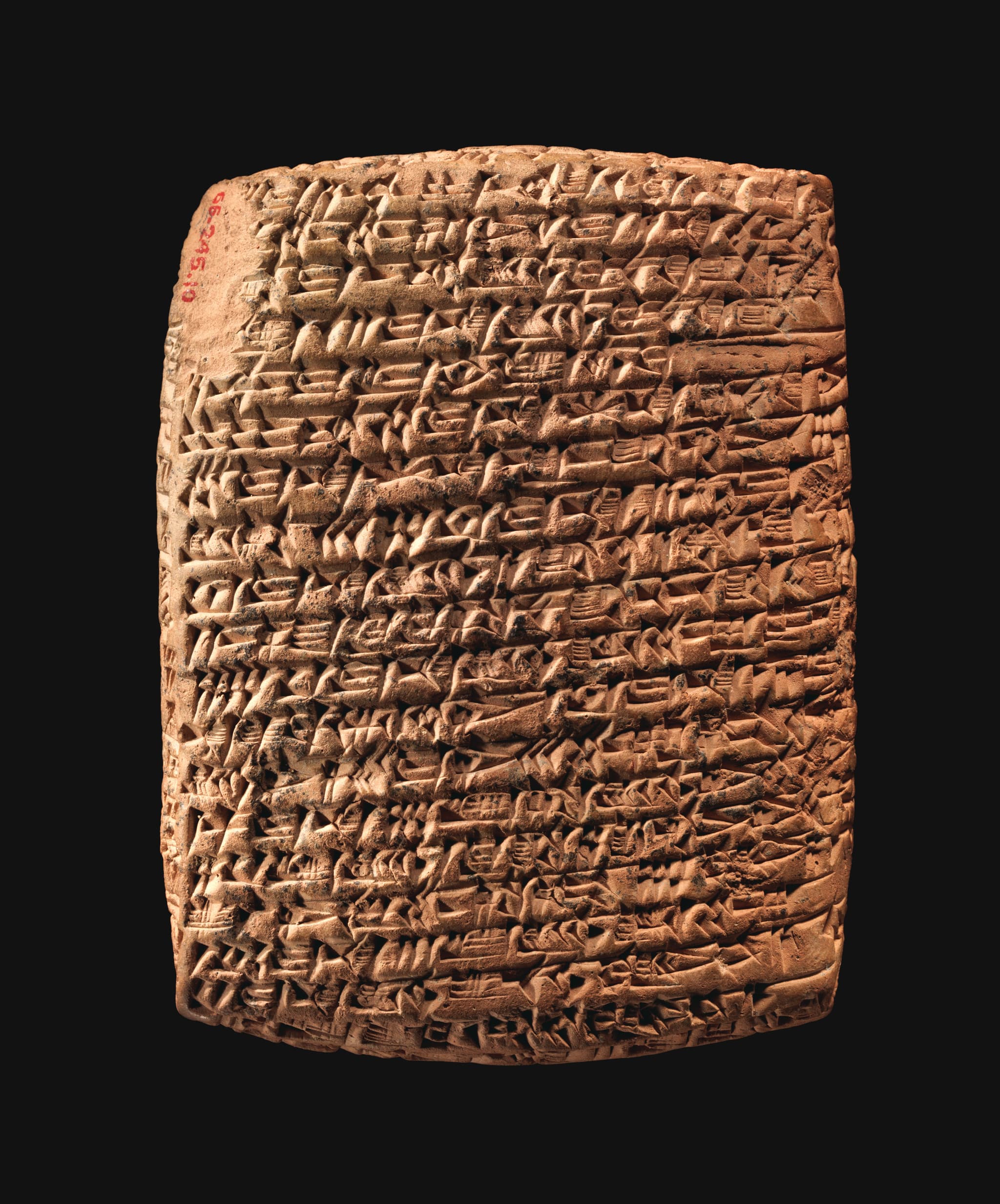
Ancient Assyria Cuneiform Trade Letter

Language & Writing

The ancient Assyrians spoke Akkadian, one of the earliest known Semitic languages. Written in the cuneiform script— wedge-shaped marks impressed into clay tablets—Akkadian served as the lingua franca of the ancient Near East for over two millennia.

Evolution to Aramaic

Over time, Aramaic gradually replaced Akkadian as the spoken language. By the late Assyrian period, Aramaic had become the common tongue, eventually evolving into Syriac and modern Assyrian Neo-Aramaic (Suret), which Assyrians speak today—a living link spanning over 3,000 years.

Legacy & Continuity

"The fall of the Assyrian Empire in 609 BC did not mark the end of the Assyrian people."

Despite the collapse of their empire, the Assyrian people endured. They survived through successive waves of Babylonian, Persian, Greek, Roman, Parthian, and Sassanian rule, each time adapting while preserving their core identity.

In the 1st century AD, they embraced Christianity, becoming one of the first nations to do so. This adoption of Christian faith became a new cornerstone of Assyrian identity, complementing their ancient heritage and providing spiritual strength through centuries of challenges.

Today, modern Assyrians carry forward a legacy stretching back 6,700 years—a testament to the resilience and endurance of one of humanity's oldest civilizations.